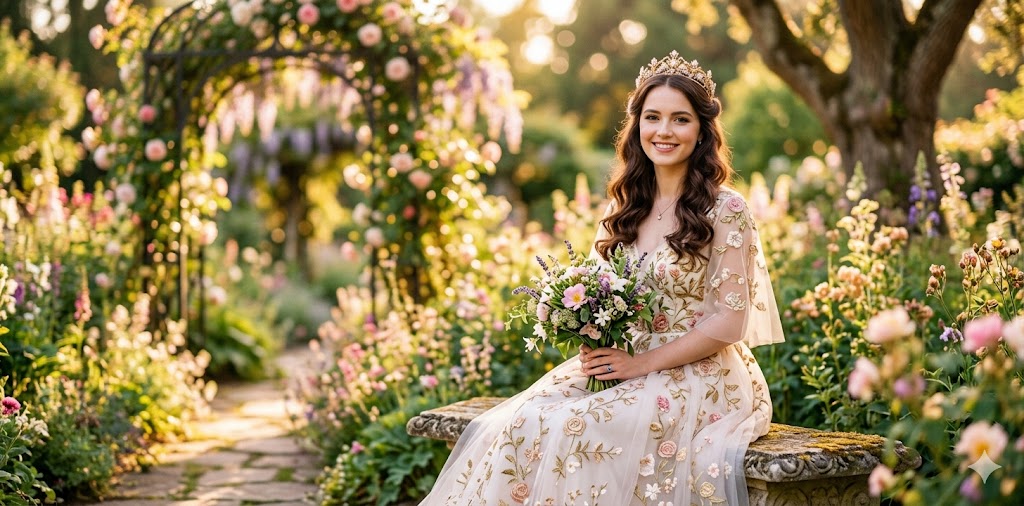
Princess Amelia was born into the powerful Hanoverian dynasty at a moment when European politics were undergoing rapid transformation, and her identity was shaped from the beginning by both German heritage and British royal expectations. Born in Hanover in 1711, she entered a world where royal children were not simply raised as family members but as political symbols whose lives were closely tied to dynastic strategy. Her early environment was defined by court discipline, formal education, and an atmosphere where emotional expression was often secondary to duty and structure.
A Childhood Overshadowed by Royal Transition
The early life of Princess Amelia was deeply influenced by the dramatic rise of her family to the British throne in 1714, when her grandfather, George I, became king. This transition permanently changed the trajectory of her life, transforming her from a German princess into a central figure of British royalty. The shift meant relocation, cultural adaptation, and an increasing awareness that her life would always be tied to political expectations rather than personal freedom.
As the Hanoverian family established itself in Britain, the royal household became a complex environment filled with court officials, political advisors, and ceremonial obligations. Princess Amelia childhood was therefore not defined by stability in one location but by adaptation to new surroundings and evolving responsibilities. The constant movement between residences and the structured nature of court life contributed to a sense of emotional distance in her upbringing.
Formation of Character Within a Structured Court System
As she matured, Princess Amelia developed a character shaped by the rigid systems of 18th-century royal governance. The British court was not simply a residence but an institution where every member had a defined role. For royal daughters, this often meant embodying grace, obedience, and dignity while avoiding political controversy. Amelia adapted to these expectations with quiet discipline, becoming known for her composed and steady demeanor.
Her education included language studies, religious instruction, music, and etiquette, all designed to prepare her for ceremonial duties and potential diplomatic marriage. However, unlike some of her siblings who were more socially active or politically ambitious, Amelia appeared to prefer intellectual solitude and structured routines. This difference set her apart within the royal family, giving her a reputation for being reserved yet dependable.
The Expectations Placed on a Royal Daughter
Within the Georgian royal family, daughters were often viewed as diplomatic assets whose marriages could strengthen alliances between nations. Princess Amelia was no exception, and from a young age, her future was likely discussed in political circles. However, despite these expectations, she never entered into marriage, making her one of the few royal princesses of her era to remain unmarried throughout her life.
This unmarried status was not necessarily a reflection of personal choice alone but rather a combination of political circumstances, timing, and shifting alliances. European courts were highly strategic in arranging marriages, and suitable matches depended on complex negotiations between royal families. As these negotiations evolved, Amelia gradually remained within the British court without being assigned a foreign alliance.
Life Inside the Private Royal Residences
Much of Princess Amelia’s adult life was spent within royal residences such as Kensington Palace and Richmond Lodge, where she lived away from the most intense political centers of London. These environments provided her with a degree of privacy not always available at court, allowing her to establish a more controlled and predictable daily routine.
Within these residences, her life was structured yet quieter than the public-facing roles of other royal family members. She was attended by servants and courtiers but maintained a relatively small social circle compared to other members of the royal family. This lifestyle reflected her preference for calm surroundings and limited social interaction.
Emotional Distance and Family Dynamics at Court
The relationship between Princess Amelia and her family was shaped by the formal structure of royal life. Her father, King George II, maintained a strict and authoritative presence, prioritizing discipline and duty over emotional openness. While he ensured the stability of the royal household, his interactions with his children were often governed by protocol rather than affection.
Her mother, Queen Caroline, was intellectually influential and deeply involved in political matters, yet her responsibilities limited her ability to engage emotionally with her children. As a result, Princess Amelia’s family relationships were respectful but not deeply expressive. This emotional structure was common in royal households of the time, where duty often outweighed personal connection.
Withdrawal from Public Court Life and Increasing Solitude
As Princess Amelia grew older, she gradually reduced her participation in public court events. This withdrawal was influenced by a combination of health considerations, personal preference, and the natural progression of aging within the royal system. Rather than maintaining a highly visible role, she chose to live a more secluded life within royal residences.
Her retreat from public duties did not diminish her status as a princess but instead redefined her role within the royal family. She transitioned from an active ceremonial figure to a more symbolic presence, respected but less frequently seen in public settings. This shift reflected a broader pattern among some royal women of her time, who moved between public duty and private withdrawal depending on personal circumstances.
Final Years and the End of a Hanoverian Era
The final years of Princess Amelia’s life marked the gradual closing of an important chapter in British royal history. Living to the age of 75, she witnessed significant changes in Britain and Europe, including political revolutions, colonial expansion, and shifts in monarchical power. Her longevity made her one of the last surviving children of George II, symbolically linking her to an earlier generation of Hanoverian rule.
Her death in 1786 marked the end of a long life defined not by political action but by quiet continuity within the royal system. She did not leave behind major political achievements or public controversies, yet her life represented the stability and endurance of the monarchy through changing times. Her passing was a moment of historical transition, closing the chapter on a generation that had shaped early Georgian Britain.
Historical Interpretation and Modern Perspective on Her Legacy
In modern historical interpretation, Princess Amelia is often viewed as a figure who represents the private side of royal life in the 18th century. While she did not engage in political leadership or public reform, her life provides valuable insight into the emotional and social structure of the British royal family during the Georgian era.
Her story is frequently used to illustrate the limited autonomy of royal women in her time, as well as the emotional constraints placed on individuals born into dynastic systems. At the same time, her preference for privacy and her withdrawal from public life can also be interpreted as a form of personal agency within a highly structured environment.
Final Thought
Princess Amelia’s life represents the quieter side of monarchy—one that is not defined by power or public drama, but by duty, restraint, and emotional endurance. Living within one of Europe’s most influential royal families, she experienced both privilege and limitation, where personal choices were often shaped by political expectations and court traditions.
Her story reminds us that history is not only written by rulers and reformers, but also by those who lived in the background of power, maintaining continuity and stability without seeking attention. Princess Amelia’s legacy is subtle but meaningful, offering a glimpse into the human reality behind royal titles.
Also Read Here: Liv Swearingen