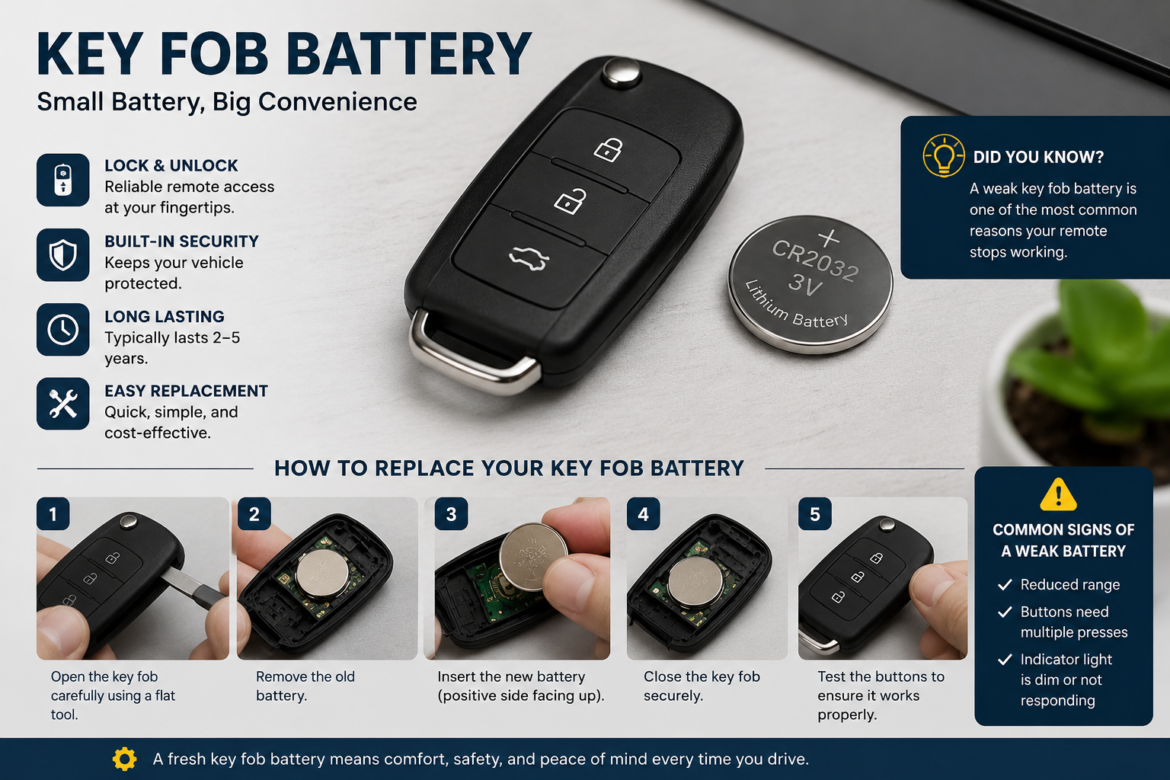
A key fob battery is a small but essential component that keeps modern vehicle remote systems working smoothly. Most drivers rely on their key fob every day to lock and unlock doors, start their vehicles, open trunks, or activate security features without thinking about the tiny battery inside. However, when the battery begins to weaken, the convenience of a key fob can quickly disappear. Understanding how a key fob battery works, when it needs replacement, and how to choose the right battery can help prevent unexpected problems.
What Is a Key Fob Battery and How Does It Work?
A key fob battery is a small, coin-shaped battery that powers a vehicle remote control. These batteries are usually lithium-based because they provide long-lasting power in a compact design. The most common types include CR2032, CR2025, and CR2016 batteries, although the exact battery type depends on the vehicle manufacturer and key fob model.
When a button on the key fob is pressed, the battery powers the internal circuit board. The circuit then sends a radio frequency signal to the vehicle’s receiver. If the vehicle recognizes the signal, it performs the requested action, such as unlocking the doors or starting the engine.
Signs That Your Key Fob Battery Needs Replacement
A reduced operating range is usually the first sign. If you previously could unlock your vehicle from a distance but now need to stand closer, the battery may be losing power. Another common symptom is delayed response when pressing buttons. You may notice that you need to press a button multiple times before the vehicle responds.
Some vehicles display a warning message on the dashboard when the key fob battery is low. This feature is common in newer models and gives drivers enough time to replace the battery before it completely fails. Other signs include inconsistent performance, dim indicator lights on the key fob, or a key fob that works only occasionally.
How Long Does a Key Fob Battery Last?
The lifespan of a key fob battery varies depending on the battery type, vehicle model, and how often the key fob is used. In general, most key fob batteries last between two and five years. Drivers who frequently use remote features may notice the battery draining faster. Environmental conditions can also affect battery performance.
Extremely hot or cold temperatures may reduce battery efficiency and shorten its lifespan. For example, vehicles parked outdoors in harsh climates may require more frequent key fob battery replacements. The quality of the replacement battery also matters. Cheap batteries may appear to save money initially, but they often provide shorter service life and inconsistent performance.
Common Key Fob Battery Types
Different vehicles require different key fob batteries. The most widely used type is the coin-cell lithium battery because it is compact, lightweight, and capable of holding power for long periods. The CR2032 battery is one of the most popular choices and is commonly found in many car key fobs. It has a 20mm diameter and 3.2mm thickness.
Although some batteries may look almost identical, using the wrong type can cause problems. A battery that does not fit properly may prevent the key fob from closing correctly or may not provide enough power. Always check the vehicle manual or the old battery label before purchasing a replacement.
How to Replace a Key Fob Battery Step by Step
Replacing a key fob battery is usually a simple process that does not require professional assistance. Most drivers can complete the replacement within a few minutes. First, locate the small opening or slot on the key fob. Many key fobs can be opened using a small flat screwdriver, coin, or the vehicle’s emergency key. Carefully separate the two halves of the key fob without damaging the plastic casing.
Once opened, locate the old battery and note its position. Remove the old battery gently and insert the new one in the same orientation. The positive and negative sides must be placed correctly for the key fob to work. After installing the new battery, close the key fob securely and test all buttons. If the key fob does not respond, check whether the battery is installed correctly or whether the contacts inside the device need cleaning.
Choosing the Right Key Fob Battery
Selecting the correct key fob battery is important for proper performance. The first step is identifying the battery number printed on the existing battery. This number provides information about the battery size and type. When purchasing a replacement, consider choosing a reputable brand known for quality and reliability.
A high-quality lithium battery provides stable power and usually lasts longer than inexpensive alternatives. It is also important to purchase batteries from reliable sellers. Old or poorly stored batteries may lose their charge before they are even installed. Checking the packaging date and buying from trusted retailers can help ensure better performance.
Why a Key Fob Battery Dies Quickly
A key fob battery that drains unusually fast may indicate an underlying issue. While normal battery aging is expected, several factors can cause premature failure. Accidental button presses can drain the battery, especially when the key fob is kept in a pocket, bag, or crowded drawer.
Constant communication between the key fob and vehicle may also increase battery usage in some advanced systems. Water damage, internal circuit problems, or physical damage can also affect battery life. If replacing the battery does not solve the issue, the problem may be with the key fob itself rather than the battery.
Can You Start a Car With a Dead Key Fob Battery?
Many modern vehicles are designed to work even when the key fob battery is completely dead. Manufacturers include backup systems that allow drivers to start their vehicles in emergencies. Some vehicles have a hidden mechanical key inside the fob that can unlock the door manually.
Others require placing the key fob near a specific area, such as a start button or designated sensor location, so the vehicle can detect the fob’s built-in chip. These emergency methods vary by vehicle model. Reading the owner manual can help drivers understand what to do if the key fob battery fails unexpectedly.
Tips to Extend Key Fob Battery Life
Proper care can help maximize the lifespan of a key fob battery. Avoid pressing buttons unnecessarily and keep the key fob away from objects that may accidentally activate it. Protecting the key fob from extreme temperatures, moisture, and physical damage can also improve battery performance.
Store spare keys in safe locations where buttons will not be pressed accidentally. Replacing the battery before it completely fails is another useful habit. Keeping a spare battery available can prevent inconvenience, especially during travel or emergencies.
Frequently Asked Questions About Key Fob Batteries
Many drivers have questions about key fob battery replacement and maintenance. One common question is whether changing the battery affects the key fob programming. In most cases, replacing only the battery does not erase the connection between the key fob and the vehicle.
Drivers also often ask whether they should replace both key fob batteries if they have multiple keys. If both keys use batteries of the same age, replacing them together can be a practical choice because they are likely to wear out around the same time.
Conclusion
A key fob battery may be small, but it plays a major role in modern vehicle convenience and security. Regularly checking battery performance, recognizing warning signs, and choosing the correct replacement battery can help avoid unexpected problems.
Replacing a key fob battery is usually quick and affordable, making it one of the easiest forms of vehicle maintenance. By understanding how key fob batteries work and how to care for them properly, drivers can ensure reliable access to their vehicles whenever they need them.
You May Also Read: Lexi Rivera