Introduction to the Glamping Economy
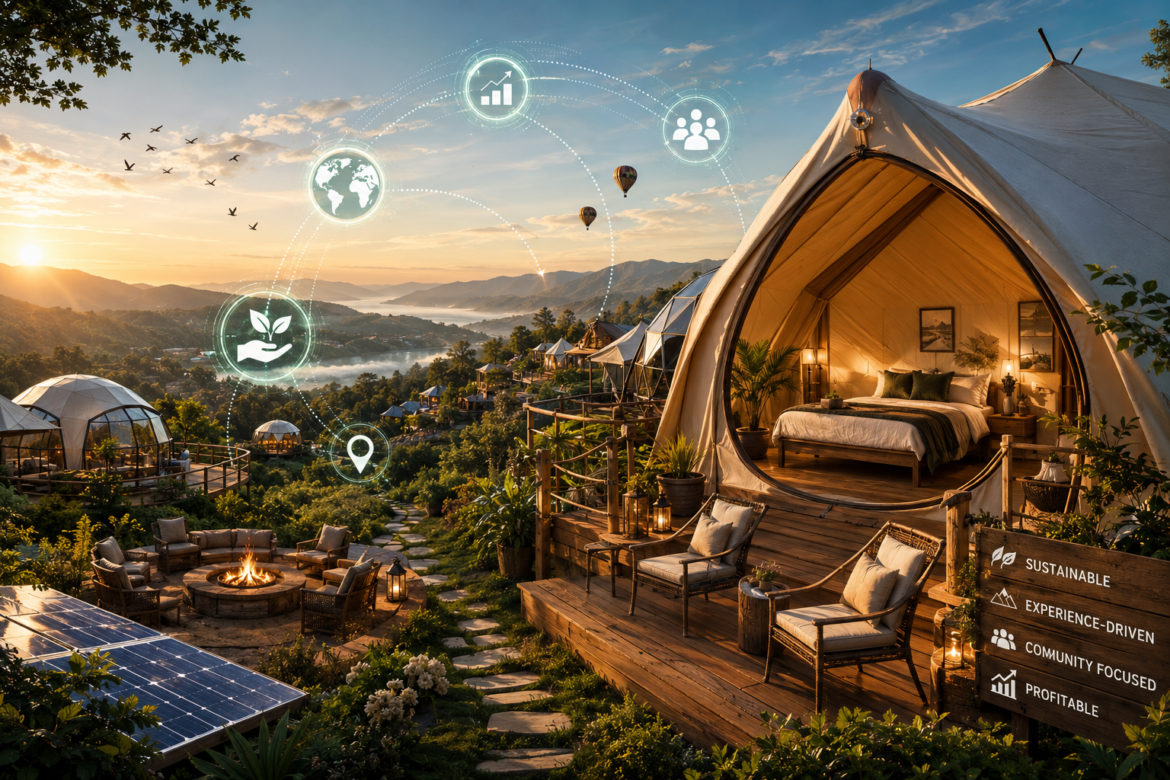
The glamping economy represents a rapidly growing segment of the global travel and hospitality industry that merges luxury accommodation with the natural outdoor experience of traditional camping. The term “glamping” itself is derived from “glamorous camping,” and it reflects a shift in consumer behavior where travelers seek comfort, exclusivity, and nature at the same time.
This transformation has turned outdoor tourism into a premium market, attracting both investors and travelers who are willing to pay more for comfort blended with nature. The glamping economy is not just a travel trend but a structured and expanding industry that contributes significantly to local economies, sustainable tourism development, and rural revitalization.
Evolution and Origins of Glamping
The concept of luxurious outdoor living is not entirely new, as historical records show that elites and royals often traveled with elaborate tents and portable accommodations. However, the modern glamping economy began to take shape in the early 2000s when eco-tourism and experiential travel started gaining popularity. As travelers became more conscious of environmental impact and increasingly interested in authentic experiences, traditional hotels and resorts began to feel restrictive.
This shift encouraged entrepreneurs to create hybrid hospitality models that maintained proximity to nature without sacrificing comfort. Over time, advancements in construction, renewable energy, and portable infrastructure allowed glamping sites to evolve into sophisticated, sustainable accommodations. Today, the glamping economy is a multi-billion-dollar global industry with strong growth across North America, Europe, Asia, and emerging tourism markets.
Market Growth and Economic Impact
The glamping economy has experienced exponential growth over the past decade, driven by rising disposable incomes, increased interest in experiential travel, and the influence of social media. Travelers now prioritize unique experiences over material consumption, and glamping provides a visually appealing and emotionally engaging alternative to traditional vacations.
This demand has led to a surge in investments in eco-resorts, boutique camping sites, and luxury outdoor retreats. Economically, glamping contributes to job creation in rural areas, stimulates local supply chains, and increases tourism revenue in regions that previously had limited hospitality infrastructure. Small communities benefit from increased visitor spending on local food, crafts, transportation, and guided experiences.
Consumer Behavior Driving the Glamping Economy
The rise of the glamping economy is closely linked to changing consumer preferences, especially among millennials and Gen Z travelers. These groups value experiences, authenticity, and sustainability more than traditional luxury. Instead of staying in conventional hotels, they seek immersive environments that allow them to connect with nature without giving up comfort.
Social media has played a crucial role in shaping this behavior, as visually stunning glamping sites often become viral content on platforms like Instagram and TikTok. This visibility fuels demand and creates a cycle where aesthetic appeal directly influences booking rates. Post-pandemic travel trends have further accelerated interest in private, isolated, and nature-based accommodations, positioning glamping as a safer and more desirable alternative to crowded tourist destinations.
Business Models Within the Glamping Industry
The glamping economy operates through diverse business models that cater to different market segments. Some operators focus on high-end luxury experiences, offering fully serviced tents with spa treatments, gourmet dining, and personalized activities. Others adopt mid-range models that balance affordability with comfort, targeting families and budget-conscious travelers.
There are also eco-focused glamping businesses that emphasize sustainability, using solar energy, composting toilets, and locally sourced materials. Franchise-based glamping networks are emerging as well, allowing investors to replicate successful site designs in multiple locations. Landowners in rural areas are increasingly partnering with hospitality brands to convert unused land into profitable glamping destinations.
Technology and Innovation in Glamping
Technology plays a significant role in shaping the modern glamping economy. Innovations in modular architecture, renewable energy systems, and smart hospitality solutions have made it easier to build and manage remote luxury accommodations. Solar-powered tents, off-grid water systems, and energy-efficient heating solutions allow glamping sites to operate sustainably in diverse environments.
Digital booking platforms and mobile apps have also streamlined the customer experience, making it easier for travelers to discover and reserve unique stays. Some advanced glamping resorts now incorporate smart room controls, automated lighting, and AI-driven guest services to enhance comfort. In addition, virtual reality and augmented reality are being used in marketing to give potential customers immersive previews of glamping experiences before they book.
Sustainability and Environmental Impact
One of the defining characteristics of the glamping economy is its strong emphasis on sustainability. Unlike large-scale hotel developments that often require significant land alteration, glamping sites are typically designed to have minimal environmental impact. Many operators prioritize eco-friendly construction materials, renewable energy sources, and waste reduction systems.
This approach aligns with the values of environmentally conscious travelers who want to reduce their carbon footprint while still enjoying leisure activities. Glamping also encourages conservation by promoting awareness of natural ecosystems and supporting protected areas through tourism revenue.
Luxury Experience and Customer Expectations
Customer expectations within the glamping economy have evolved significantly as the industry matures. Modern travelers are no longer satisfied with basic comfort in nature; instead, they expect high-end amenities combined with personalized services. Luxury glamping experiences now often include private hot tubs, panoramic glass tents, king-sized beds, climate control systems, and curated outdoor activities such as guided hiking, stargazing, and wildlife tours.
Some premium sites even offer wellness packages that include yoga sessions, spa treatments, and organic gourmet meals prepared by professional chefs. The emphasis is not only on accommodation but also on the overall lifestyle experience. As competition increases, operators are continuously innovating to differentiate their offerings and enhance guest satisfaction.
Community Engagement and Ethical Tourism
Ethical tourism is a central pillar of the glamping economy, as many operators aim to ensure that local communities benefit directly from tourism activities. Community engagement initiatives often include hiring local staff, sourcing materials from nearby suppliers, and supporting cultural preservation projects.
This model helps prevent the exploitation often associated with mass tourism and encourages more equitable economic distribution. Ethical glamping practices emphasize respect for local ecosystems and wildlife, ensuring that tourism activities do not harm natural habitats.
Future Outlook of the Glamping Economy
The future of the glamping economy appears highly promising, with continued growth expected across global markets. As travel trends shift further toward personalized and experiential tourism, glamping is likely to become a mainstream accommodation option rather than a niche offering. Emerging technologies will continue to enhance the guest experience, while sustainability will remain a central focus of development.
Expansion into new geographic regions, including deserts, forests, coastal areas, and mountainous terrains, will diversify the industry further. Additionally, partnerships between hospitality brands and local communities are expected to strengthen, ensuring that economic benefits are distributed more widely. The integration of wellness tourism, adventure travel, and digital nomad lifestyles will also contribute to the evolution of glamping into a more holistic hospitality ecosystem.
Conclusion
The glamping economy represents a powerful convergence of luxury hospitality, nature-based tourism, and sustainable development. It reflects a broader shift in global consumer values toward meaningful experiences, environmental responsibility, and flexible travel lifestyles. As the industry continues to expand, it will play an increasingly important role in shaping the future of tourism, particularly in rural and underdeveloped regions.
While challenges such as regulation and environmental impact must be carefully managed, the overall trajectory of the glamping economy remains strongly positive. With continued innovation and responsible growth, glamping has the potential to redefine how people experience travel and reconnect with the natural world.
You May Also Read: You May Also Read