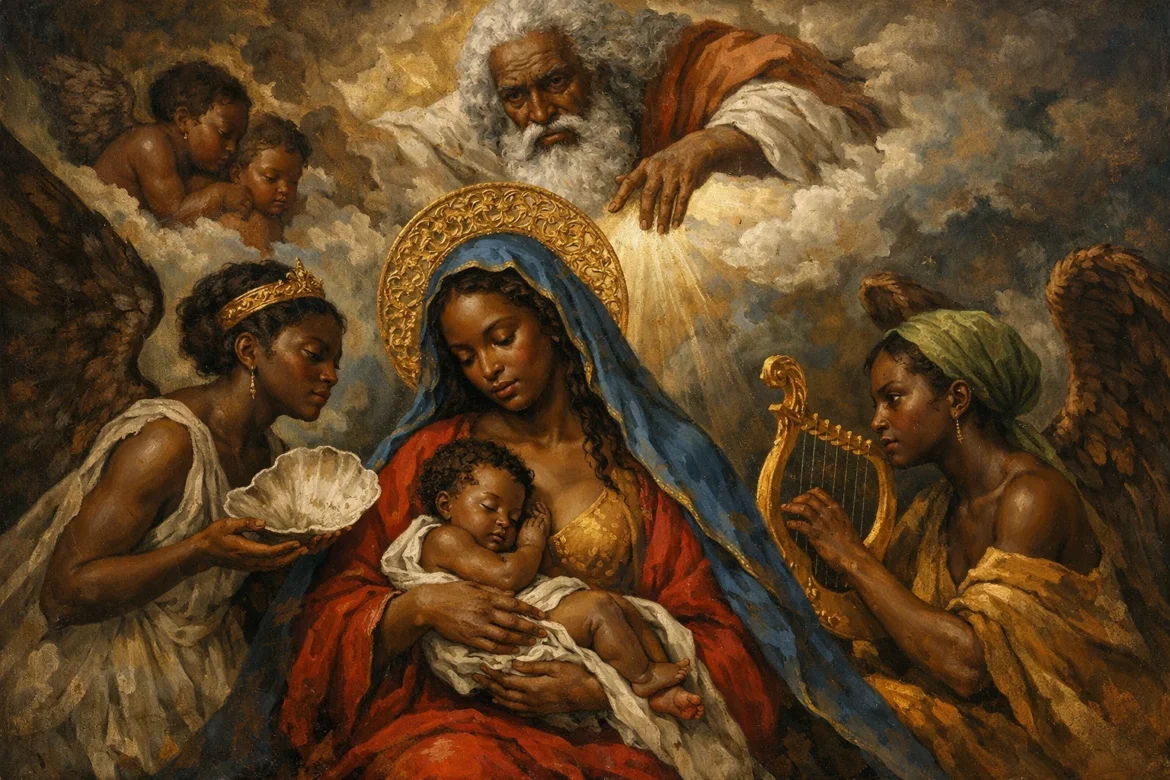
Harmonia Rosales is a contemporary Afro-Cuban American artist whose work has sparked global conversations about representation, identity, and the rewriting of art history. Known for her striking reinterpretations of classical European masterpieces, Rosales challenges traditional narratives by placing Black women at the center of iconic imagery. Her paintings are not merely aesthetic reinterpretations; they are deeply philosophical, cultural, and political statements that question centuries of exclusion and invisibility in Western art.
Early Life and Cultural Influences
Born in Chicago and raised in a culturally rich Afro-Cuban household, Harmonia Rosales was immersed in a blend of Caribbean and American traditions from an early age. Her heritage played a significant role in shaping her worldview, particularly her understanding of spirituality, identity, and history.
Growing up, Rosales was exposed to the complexities of race and gender, experiences that would later inform her artistic voice. Her family’s connection to Afro-Caribbean spiritual systems, such as Santería, provided her with a deep appreciation for symbolism and mythology, elements that are now central to her work.
Education and Artistic Development
Rosales pursued formal training in art, studying at the School of the Art Institute of Chicago, where she honed her technical skills and developed a strong foundation in classical painting techniques. During her academic years, she became deeply familiar with Renaissance and Baroque art, studying the works of masters such as Leonardo da Vinci, Michelangelo, and Caravaggio.
While she admired their technical brilliance, she also became increasingly aware of the lack of diversity in the subjects depicted. This realization sparked a critical question that would define her career: why were Black bodies absent from these celebrated works of art? Her education thus became both a source of inspiration and a catalyst for challenging the established canon.
Breaking the Canon: Reimagining Classical Masterpieces
One of the defining aspects of Harmonia Rosales work is her reinterpretation of well-known classical paintings. By recreating iconic compositions with Black women as central figures, she disrupts the traditional Eurocentric narrative that has dominated art history for centuries.
Through this approach, she transforms familiar images into powerful statements about inclusion and representation. Her paintings encourage viewers to confront their own assumptions about beauty, divinity, and authority, making her work both visually captivating and intellectually engaging.
Spiritual Symbolism and Mythology
Spirituality plays a central role in Rosales’ art, particularly her use of Afro-Caribbean religious symbolism. Drawing from traditions such as Santería and Yoruba mythology, she incorporates deities, rituals, and symbolic elements into her paintings. These references add layers of meaning to her work, allowing viewers to engage with it on both a visual and spiritual level.
By integrating these elements into compositions inspired by Western art, Rosales creates a unique dialogue between different cultural traditions. This fusion not only enriches her work but also highlights the interconnectedness of human spirituality across cultures.
Challenging Historical Narratives
Harmonia Rosales’ art can be seen as a form of historical revisionism, but in a constructive and inclusive sense. Rather than rejecting the past, she seeks to reinterpret it in a way that acknowledges the contributions and presence of marginalized groups.
This approach has significant implications not only for art but also for how we understand history more broadly. By questioning established narratives, Rosales encourages viewers to think critically about the stories we tell and whose voices are included in them.
Reception and Impact in the Art World
Rosales’ work has been widely recognized and celebrated in the contemporary art world. Her paintings have been exhibited in galleries and museums across the United States and beyond, attracting attention from critics, collectors, and audiences alike. While many have praised her for her innovative approach and powerful संदेश, her work has also sparked debate.
Some critics argue that her reinterpretations challenge the integrity of classical art, while others see them as a necessary and overdue expansion of the artistic canon. Regardless of differing opinions, there is no denying the impact of her work in generating important conversations about representation and inclusivity.
The Role of Social Media in Her Rise
In the digital age, social media has played a significant role in amplifying Harmonia Rosales’ voice and reaching a global audience. Platforms like Instagram have allowed her to share her work with millions of people, bypassing traditional gatekeepers of the art world. This accessibility has been instrumental in building her reputation and connecting with audiences who resonate with her message.
Social media has also facilitated dialogue around her work, enabling viewers to engage with her ideas and share their own interpretations. This dynamic interaction has further enhanced the impact of her art, making it part of a broader cultural conversation.
Empowerment Through Art
One of the most powerful aspects of Rosales’ work is its ability to empower. By presenting Black women as divine and central figures, she challenges deeply ingrained stereotypes and offers a new vision of empowerment. Her paintings serve as a source of inspiration for many, particularly those who have historically been underrepresented in art.
They provide a sense of validation and visibility, reinforcing the idea that everyone deserves to see themselves reflected in cultural narratives. This empowering quality is one of the reasons her work resonates so deeply with audiences around the world.
Criticism and Controversy
Like many artists who challenge established norms, Harmonia Rosales has faced criticism and controversy. Some argue that her work appropriates classical art in a way that undermines its original context, while others question the blending of different cultural traditions.
These critiques also highlight the provocative nature of her work, which is designed to spark conversation and encourage critical thinking. Rather than avoiding controversy, Rosales embraces it as part of her artistic mission, using it as an opportunity to engage with diverse perspectives and further refine her ideas.
The Future of Harmonia Rosales’ Art
As Harmonia Rosales continues to evolve as an artist, her work is likely to explore new themes and mediums. While she is best known for her reinterpretations of classical paintings, there is potential for her to expand into other areas, such as sculpture, digital art, or immersive installations.
Regardless of the direction she takes, her commitment to challenging norms and promoting inclusivity is likely to remain a central aspect of her work. Her future projects will undoubtedly continue to push boundaries and inspire audiences around the world.
Conclusion
Harmonia Rosales stands as a transformative figure in contemporary art, using her talent and vision to challenge long-standing narratives and create space for underrepresented voices. Through her reinterpretations of classical masterpieces, she has not only redefined what art can look like but also what it can represent.
By bringing Black women to the forefront of her paintings, Rosales has opened new possibilities for representation and inclusivity, making her one of the most important and influential artists of her generation.