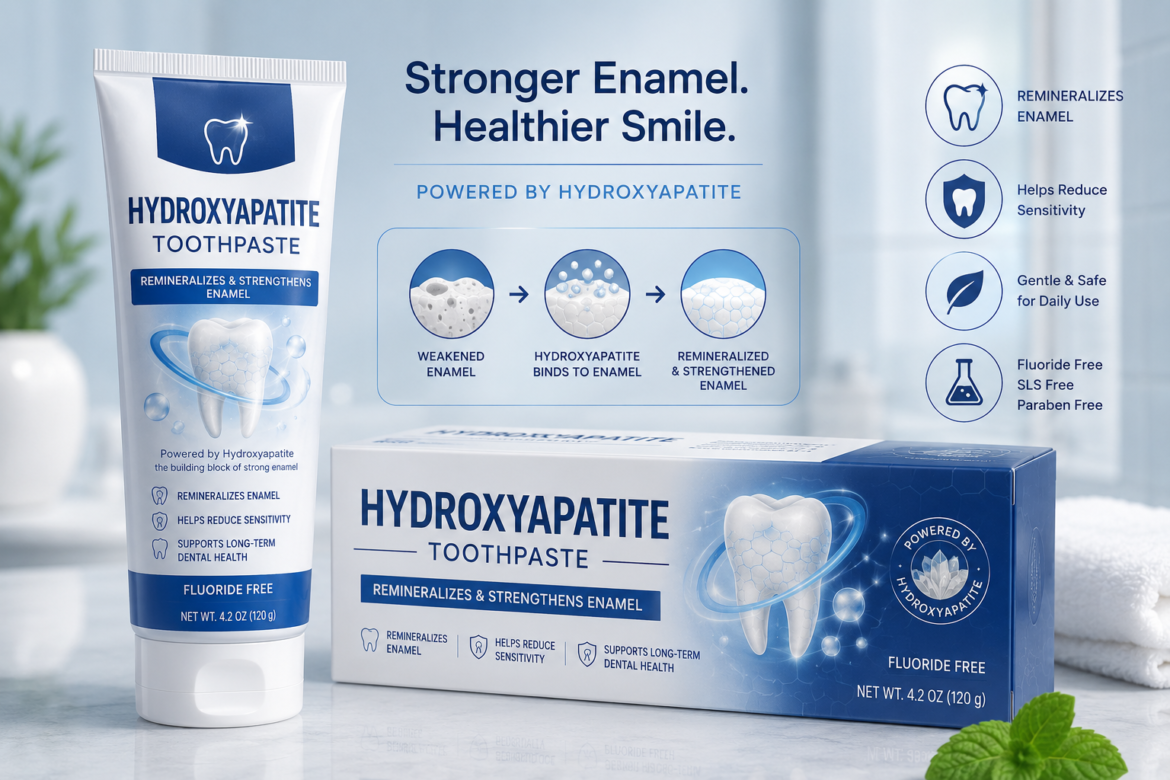
Dental care has evolved significantly over the years, with new ingredients and technologies changing the way people protect their smiles. One of the most talked-about innovations in modern oral hygiene is Hydroxyapatite Toothpaste. Unlike many traditional toothpastes that rely heavily on fluoride, hydroxyapatite toothpaste uses a naturally occurring mineral that is already found in human teeth and bones. This unique ingredient has gained attention because of its ability to support enamel health, strengthen teeth, and provide a more natural alternative for people looking to improve their daily dental routine.
What Is Hydroxyapatite Toothpaste?
Hydroxyapatite toothpaste is a type of dental toothpaste that contains hydroxyapatite, a calcium phosphate mineral that makes up a large portion of natural tooth enamel. In fact, approximately 90% of tooth enamel’s mineral structure is made from hydroxyapatite crystals. Because of this similarity, hydroxyapatite can interact with the surface of teeth in a way that supports enamel repair and overall oral health.
Unlike abrasive whitening products or harsh cleaning formulas, hydroxyapatite toothpaste focuses on restoring and maintaining the natural structure of teeth. This makes it an attractive choice for people who are interested in gentle but effective dental care.
How Does Hydroxyapatite Toothpaste Work?
The main function of hydroxyapatite toothpaste is based on a process called remineralization. Everyday activities such as eating sugary foods, drinking acidic beverages, and exposure to bacteria can gradually weaken tooth enamel. Minerals are lost from enamel during this process, making teeth more vulnerable to sensitivity and cavities.
Hydroxyapatite toothpaste works by supplying mineral particles that can bond with the tooth surface. These particles may help replace lost minerals and support the rebuilding of weakened enamel. Over time, regular use can contribute to stronger-looking and healthier teeth.
Benefits of Using Hydroxyapatite Toothpaste
One of the biggest reasons people are choosing hydroxyapatite toothpaste is because of its potential oral health benefits. This mineral-based toothpaste offers several advantages that make it different from many conventional options. A major benefit is enamel support. Since hydroxyapatite is naturally found in teeth, it works with the tooth structure rather than simply coating the surface.
Many users also choose hydroxyapatite toothpaste because it may help reduce tooth sensitivity. Sensitive teeth often occur when enamel becomes thinner and exposes areas connected to nerve pathways. By strengthening enamel and covering small surface openings, hydroxyapatite may help reduce discomfort caused by hot, cold, or sweet foods.
Hydroxyapatite Toothpaste vs Fluoride Toothpaste
For decades, fluoride has been the most common active ingredient in toothpaste. Fluoride is well known for helping prevent cavities by strengthening enamel and supporting remineralization. However, some people prefer alternatives because of personal preferences, ingredient concerns, or sensitivity to fluoride products.
Fluoride helps form stronger mineral structures on the tooth surface, while hydroxyapatite provides mineral particles that can directly integrate with enamel. Many people view hydroxyapatite toothpaste as a more biomimetic option because it follows the body’s natural mineral structure.
Is Hydroxyapatite Toothpaste Safe?
Safety is one of the most common questions surrounding new oral care ingredients. Hydroxyapatite has been studied for dental applications because it is a biocompatible mineral that naturally exists in the human body. Since teeth and bones already contain hydroxyapatite, many people consider it a gentle ingredient for daily oral care.
As with any dental product, results can vary depending on brushing habits, diet, and overall oral hygiene. Using toothpaste correctly, brushing regularly, and maintaining dental checkups remain important parts of protecting oral health.
Hydroxyapatite Toothpaste for Sensitive Teeth
Tooth sensitivity can affect daily activities such as drinking cold water, enjoying hot beverages, or eating certain foods. It often occurs when enamel becomes worn down or when protective layers around teeth become weaker. Hydroxyapatite toothpaste may help sensitive teeth by depositing mineral particles onto enamel surfaces.
Many people who experience mild sensitivity look for toothpaste options that strengthen teeth without creating additional irritation. Because hydroxyapatite is designed to work with the natural mineral structure of teeth, it has become a popular ingredient in sensitivity-focused oral care products.
Hydroxyapatite Toothpaste and Enamel Repair
Tooth enamel is the hardest substance in the human body, but it cannot naturally regenerate in the same way as other tissues. Once enamel is lost, the body cannot completely replace it. However, the process of remineralization can help strengthen weakened areas before major damage occurs.
Hydroxyapatite toothpaste supports this process by delivering calcium and phosphate minerals that are important components of enamel. These minerals can help improve the appearance and strength of the tooth surface. While hydroxyapatite cannot rebuild a completely damaged tooth, consistent use may support enamel maintenance and help protect teeth from future mineral loss.
Why Are People Switching to Hydroxyapatite Toothpaste?
Consumer interest in hydroxyapatite toothpaste has grown because many people are looking for cleaner, more natural approaches to everyday health products. Modern shoppers often pay closer attention to ingredients and prefer products that align with the body’s natural systems.
Hydroxyapatite offers a unique combination of scientific research and natural inspiration. It provides a mineral-based alternative for those who want effective dental protection without relying on traditional toothpaste ingredients. The growing popularity of this toothpaste also reflects a larger trend toward personalized healthcare, where individuals seek products that match their lifestyle, values, and comfort levels.
How to Use Hydroxyapatite Toothpaste Properly
Using hydroxyapatite toothpaste is similar to using regular toothpaste. Apply an appropriate amount to a toothbrush and brush gently for about two minutes. Make sure to clean all areas of the mouth, including the front, back, and chewing surfaces of teeth. Avoid brushing too aggressively, as excessive pressure can damage gums and wear enamel over time.
Consistent daily use is more important than aggressive brushing. For best results, hydroxyapatite toothpaste should be combined with good oral hygiene habits, including flossing, drinking enough water, and limiting excessive sugar intake.
Who Can Benefit From Hydroxyapatite Toothpaste?
Hydroxyapatite toothpaste can be appealing to a wide range of people. Those interested in natural oral care, enamel support, sensitivity protection, or alternative toothpaste options may find it beneficial. It is also often considered by individuals who want a toothpaste ingredient that closely matches the minerals naturally present in their teeth.
Parents may also explore hydroxyapatite toothpaste options for children, especially because many formulas are designed with gentle ingredients. However, parents should always choose age-appropriate dental products and consult dental professionals when needed.
The Future of Hydroxyapatite Toothpaste
The future of hydroxyapatite toothpaste looks promising as more people explore advanced oral care solutions. Dental technology continues to develop, and researchers are studying ways to improve mineral-based treatments for stronger enamel and better protection.
As awareness grows, hydroxyapatite may become a more common ingredient in everyday dental products. Its combination of natural compatibility and scientific development makes it an interesting advancement in the world of oral health.
Final Thoughts
Hydroxyapatite toothpaste represents a new generation of dental care that focuses on supporting teeth through a mineral that closely resembles the structure of natural enamel. With potential benefits such as enamel strengthening, sensitivity support, and improved mineral protection, it has become a popular choice among people seeking alternative oral care solutions.
While it is not a replacement for professional dental advice or proper hygiene habits, hydroxyapatite tooth offers an innovative option for maintaining a healthier smile. As more people prioritize natural and science-backed products, this mineral-based toothpaste is likely to continue gaining attention in the future of dental care.
You May Also Read: Paula Profit