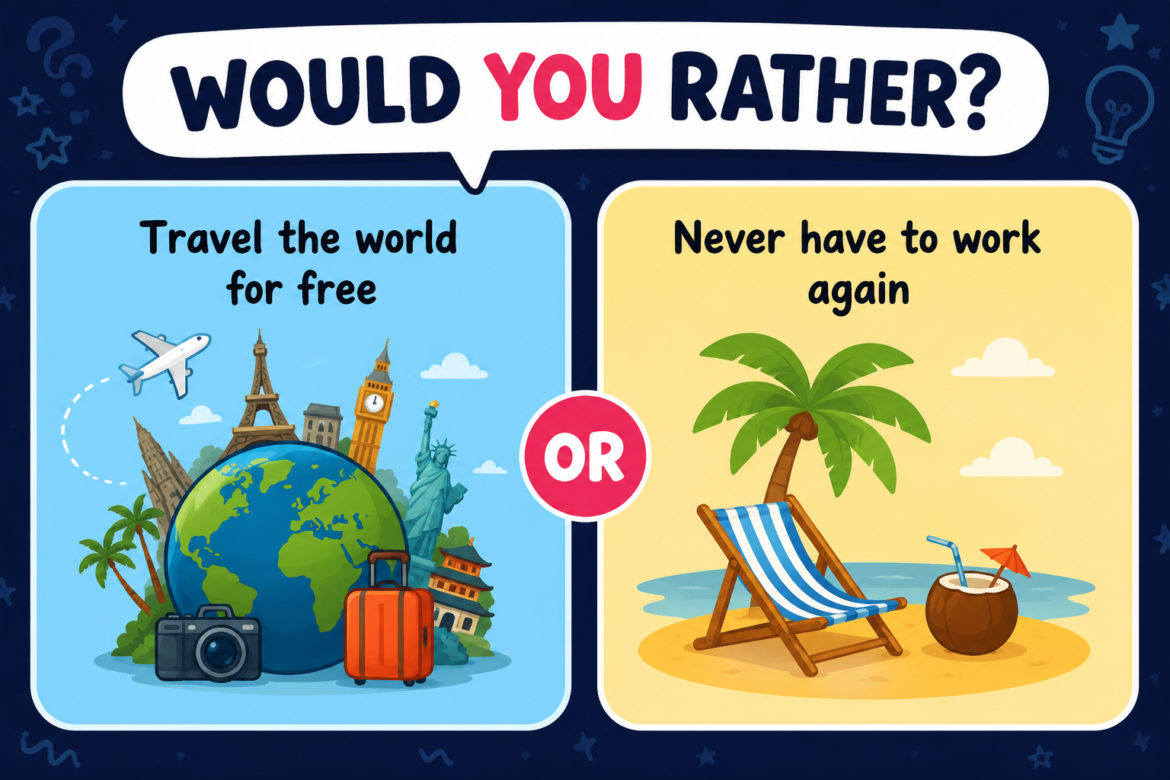
What Would You Rather Questions Really Mean and Why People Love Them
Would you rather questions are a simple but surprisingly powerful type of conversation prompt where a person is asked to choose between two difficult, funny, strange, or thought-provoking options. The appeal comes from the fact that there is rarely a perfect answer. Instead, each choice forces you to reveal something about your personality, priorities, fears, or imagination.
What makes this game so popular across social settings, classrooms, online communities, and even team-building exercises is its ability to spark instant engagement without needing any preparation or materials. It works with two people or a whole group, and it often leads to unexpected discussions that go far beyond the original question.
The Psychology Behind Would You Rather Questions
The reason would you rather questions feel so engaging is rooted in basic psychology. Humans are naturally drawn to decision-making scenarios, especially when the choices involve trade-offs. When someone is asked to choose between two imperfect or extreme options, their brain immediately begins evaluating risks, rewards, emotions, and personal values. This process happens quickly and often unconsciously, which makes the game feel spontaneous and revealing.
These questions activate storytelling instincts. Once a choice is made, people often explain their reasoning, which turns a simple question into a deeper conversation. This is why “would you rather” is frequently used in therapy exercises, communication workshops, and even marketing engagement strategies. It helps people open up in a natural, non-threatening way.
Why Would You Rather Questions Are So Popular in Social Settings
In social environments, would you rather questions serve as an instant connection tool. Many conversations struggle at the beginning because people do not know what to talk about, especially among strangers or acquaintances. This game removes that barrier by giving everyone a shared topic that is easy to understand and respond to. It eliminates awkward silence and replaces it with curiosity and laughter.
Another reason for its popularity is its adaptability. It can be played anywhere—during road trips, parties, classroom activities, online chats, or even workplace breaks. There are no rules that require preparation or moderation, which makes it extremely flexible. It also works across age groups, from children enjoying silly scenarios to adults engaging in more complex moral dilemmas.
Different Types of Would You Rather Questions
Would you rather questions can be divided into several categories depending on their tone and purpose. Lighthearted questions are the most common and are often used in casual settings. These might involve funny, unrealistic, or exaggerated situations designed purely for entertainment. They help people relax and laugh without thinking too deeply about consequences.
Finally, there are imaginative or hypothetical questions that explore fantasy scenarios, such as superpowers, time travel, or survival situations. These questions are popular in entertainment contexts because they allow people to escape reality and think creatively. Together, all these categories make the game endlessly versatile and engaging.
How Would You Rather Questions Improve Communication Skills
Although it may seem like just a game, would you rather questions actually improve communication skills in several ways. First, they encourage people to articulate their thoughts clearly. Since the choices are usually simple, individuals must explain why they picked one option over the other, which helps develop reasoning and expression skills.
Second, they promote active listening. In group settings, participants must pay attention to others’ answers to respond meaningfully or continue the conversation. This strengthens interpersonal awareness and empathy. People begin to notice patterns in how others think, which can improve understanding in real-life communication.
The Role of Would You Rather Questions in Entertainment and Media
The popularity of would you rather questions has expanded significantly with the rise of digital media. Social platforms, video content, and interactive apps frequently use this format to engage audiences. Content creators use it as a way to spark comments, encourage debates, and increase viewer interaction.
On platforms like YouTube, TikTok, and Instagram, creators often present rapid-fire versions of these questions, encouraging viewers to pause and think about their own answers. This interactive element makes passive viewing more engaging. In many cases, comment sections become lively spaces where users compare choices and explain their reasoning.
How to Create Good Would You Rather Questions
Creating effective would you rather questions is an art that balances creativity, clarity, and engagement. A good question should present two distinct choices that are both appealing or challenging in different ways. If one option is clearly better than the other, the question loses its impact because the answer becomes obvious.
The best questions often involve emotional or imaginative tension. For example, choosing between two superpowers, two life-changing situations, or two humorous extremes creates more interest than simple yes-or-no comparisons. It is also important to avoid overly complicated wording, as the question should be easy to understand instantly.
The Educational Value of Would You Rather Questions
Beyond entertainment, would you rather questions also have strong educational benefits. Teachers often use them to encourage critical thinking and discussion among students. By presenting hypothetical scenarios, educators can help students explore reasoning, ethics, and decision-making without requiring formal debate structures.
Furthermore, they help build classroom participation. Students who might not normally speak in a traditional lecture setting often feel more comfortable responding to fun or imaginative questions. This creates a more inclusive learning environment where everyone has an opportunity to contribute.
Would You Rather Questions in Digital Culture and Social Media Trends
The internet has played a major role in transforming would you rather questions into a global trend. On social media platforms, short-form content featuring these questions often goes viral because it encourages participation. Users enjoy commenting with their answers, debating with others, and sharing posts with friends to compare choices.
Influencers and content creators often use fast-paced versions of these questions to keep audiences entertained. The appeal lies in simplicity—viewers do not need to spend much time understanding the content, but they are still mentally engaged. This makes it ideal for platforms where attention spans are short, and interaction is key.
Why Would You Rather Questions Will Always Stay Popular
The lasting popularity of would you rather questions comes from their simplicity and adaptability. Unlike many trends that fade over time, this format requires no technology, no updates, and no specific cultural context. It is universal and timeless because it is based on human thought and choice.
People will always enjoy comparing options, imagining alternatives, and sharing opinions. The format also evolves easily with culture, meaning new versions of questions can reflect current events, technology, and social trends. This keeps the game fresh while maintaining its original structure.
Final Reflection
At first glance, Would You Rather Questions may appear to be nothing more than a casual pastime, but their impact goes far deeper. They serve as tools for communication, psychology, education, creativity, and even professional development. Their simplicity is what makes them powerful, allowing people of all ages and backgrounds to participate equally.
The format encourages honesty, imagination, and self-reflection in a way that few other games can achieve. Whether used for fun at a party, as a classroom activity, or as part of a digital trend, it consistently brings people together through shared curiosity. It reveals how decision-making, even in its most playful form, can open doors to understanding human behavior and personality.
You May Also Read: Keilani Bautista